Water Damage Restoration Sugar Land, TX
24/7 water damage restoration in Sugar Land, TX. The restoration team extracts standing water, dries the structure to the IICRC S500 standard and documents every step for your insurance claim.
(888) 926-4485Water still spreading in Sugar Land? Call now.- IICRC S500 standard
- Truck-mounted extraction
- Daily moisture readings

- Around-the-clock dispatchAcross Sugar Land and Fort Bend County
- IICRC S500 drying standardStructural drying, not surface drying
- Truck-mounted extractionStanding water leaves the building
- Daily moisture readingsEquipment stays until the readings say dry
Water Damage Restoration Services in Sugar Land, TX
From a slab leak under the kitchen to Brazos flood water in the garage, each service below is handled to the same drying standard.
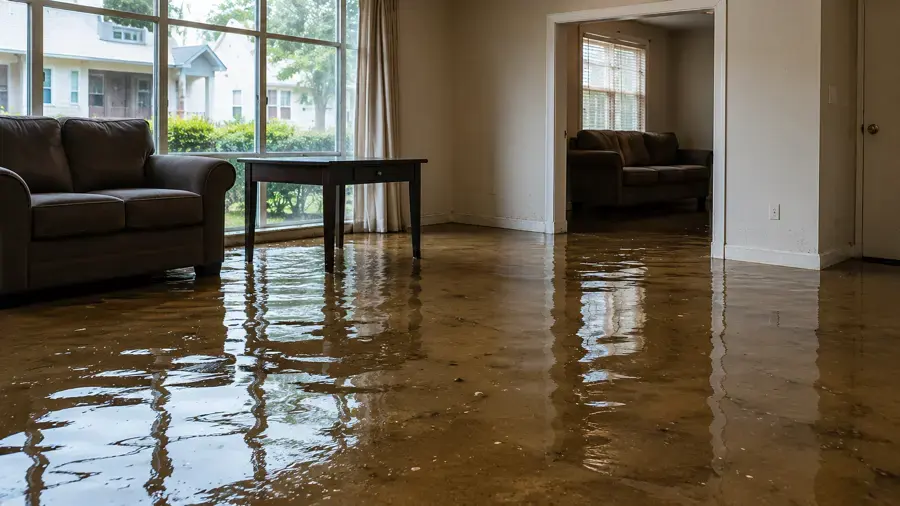 01Water Extraction & RemovalTruck-mounted extraction pulls standing water before it wicks into slab-home drywall.View service
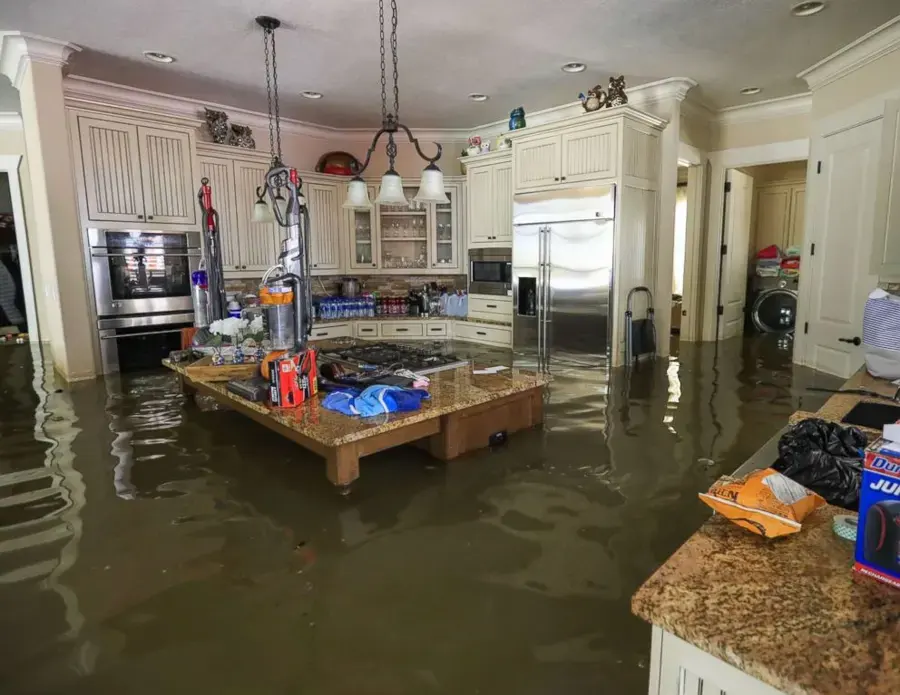 02Flood Water CleanupBrazos, Oyster Creek and street flooding treated as Category 3 water.View service
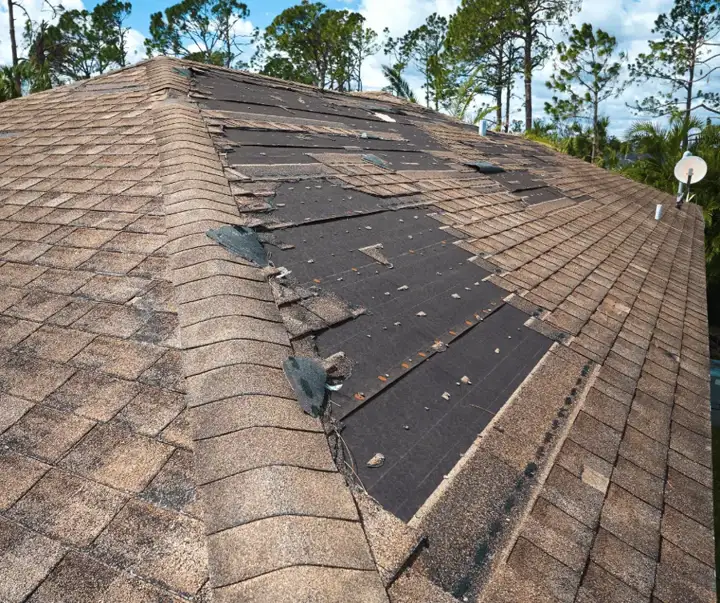 03Storm & Roof Leak Water DamageHurricane-season rain through shingles, vents and flashing, dried from attic down.View service
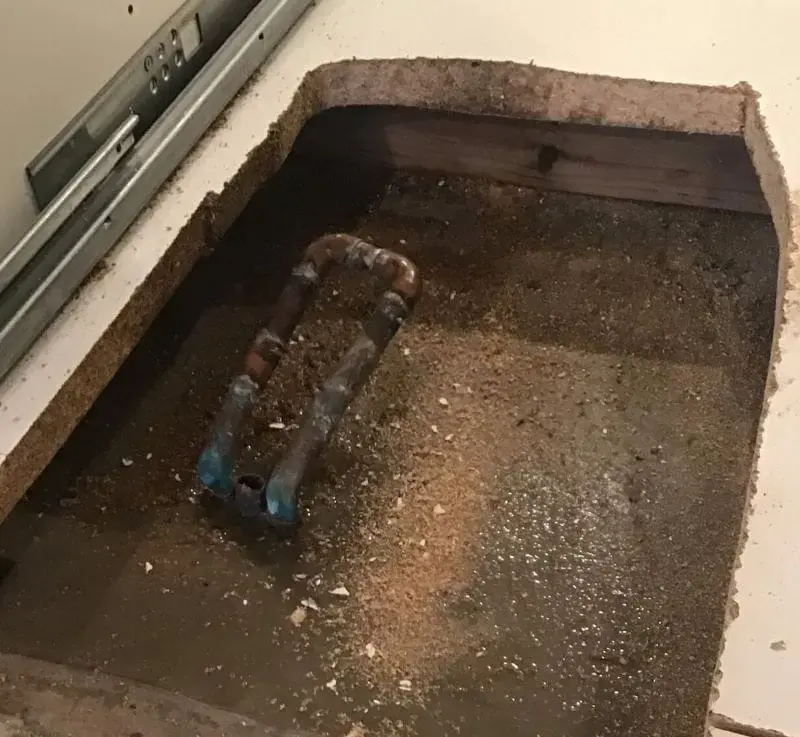 04Slab Leak Water DamageLeaks under the foundation on shifting Fort Bend clay, traced and dried out.View service
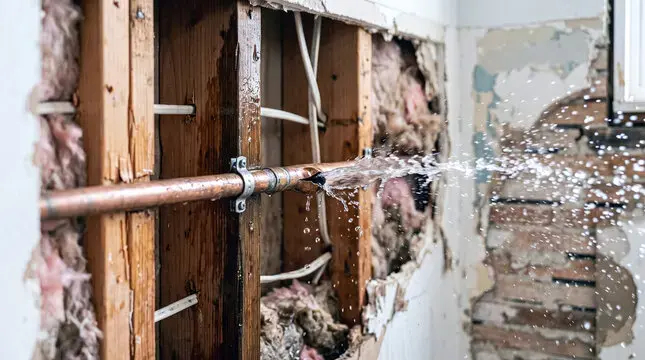 05Burst Pipe CleanupPressurized supply line failures extracted and dried inside every wall cavity.View service
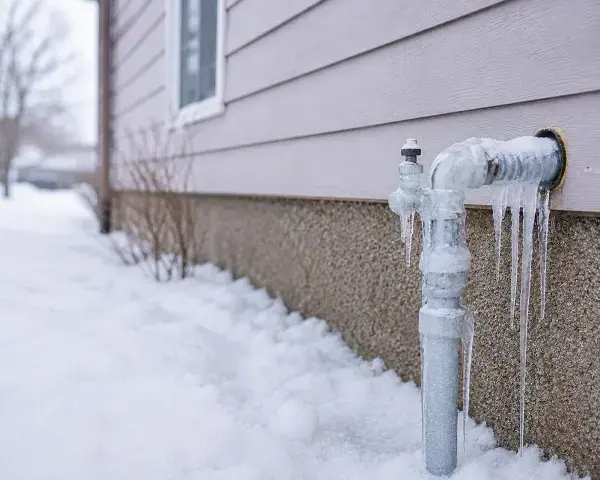 06Frozen Pipe CleanupAttic and exterior-wall lines split by a rare hard freeze, dried properly.View service
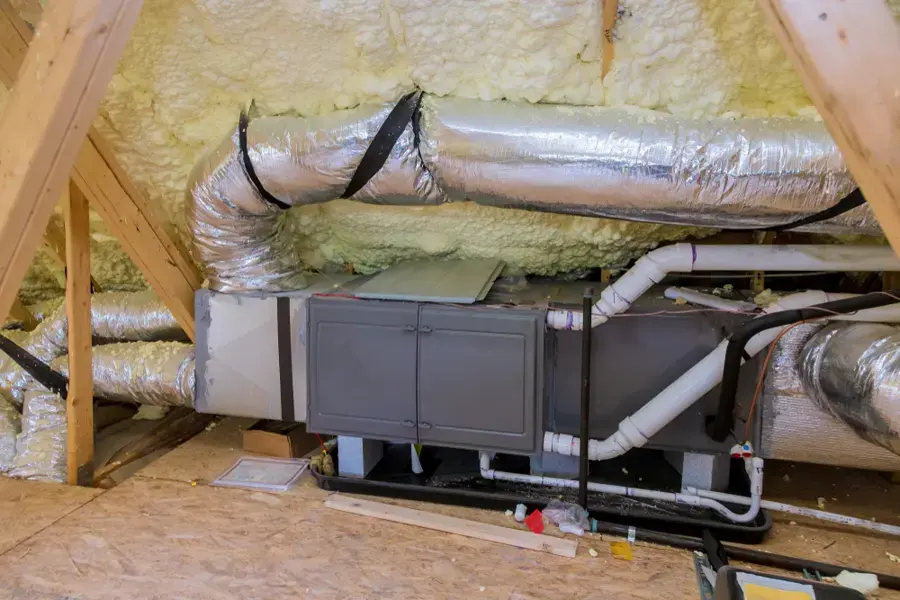 07AC & Condensate Leak Water DamageOverflowing attic drain pans that soak insulation and stain ceilings below.View service
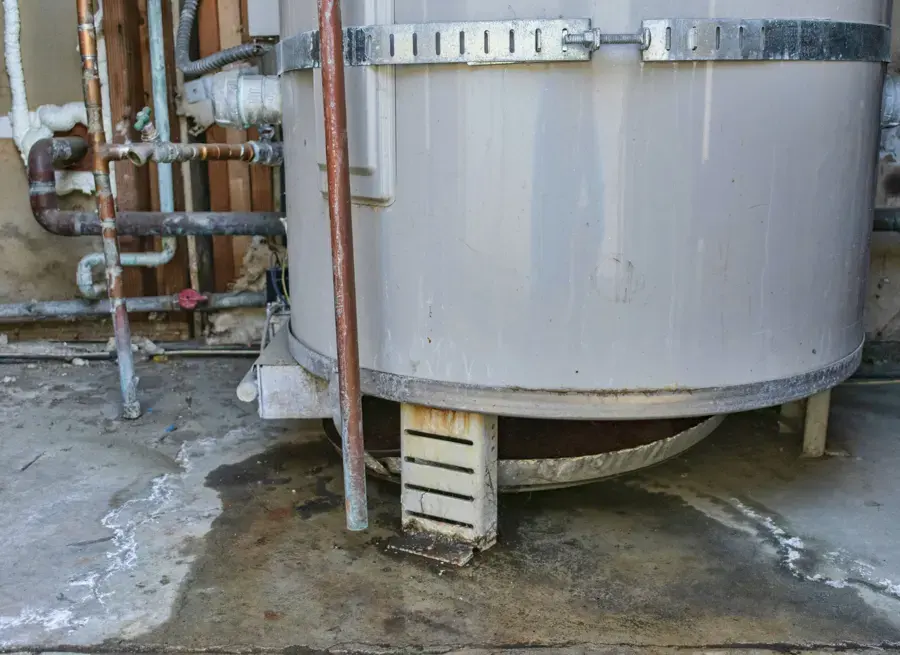 08Water Heater Failure CleanupAttic and garage tank failures that flood ceilings, closets and floors.View service
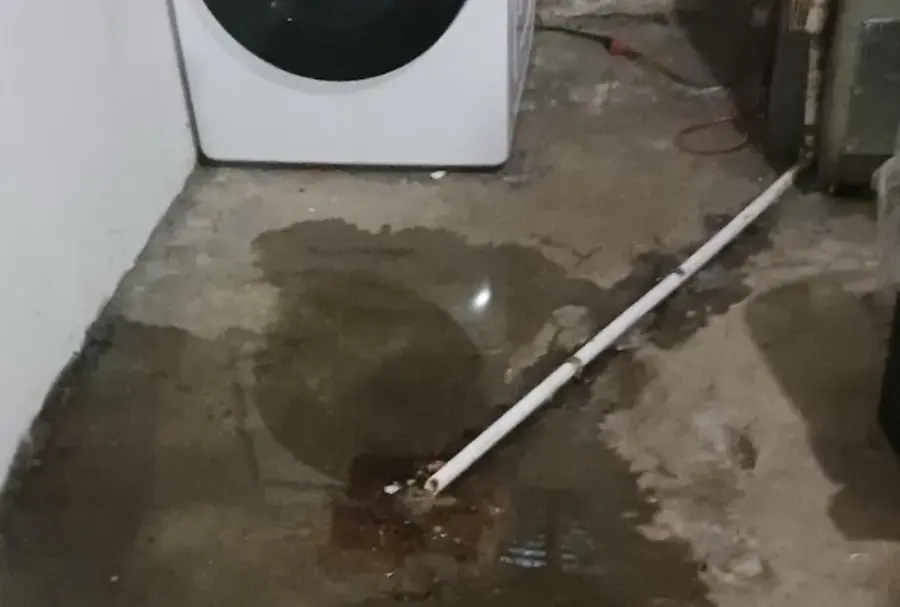 09Appliance Supply Line Leak CleanupWasher, dishwasher, fridge and ice-maker hose failures cleaned up fast.View service
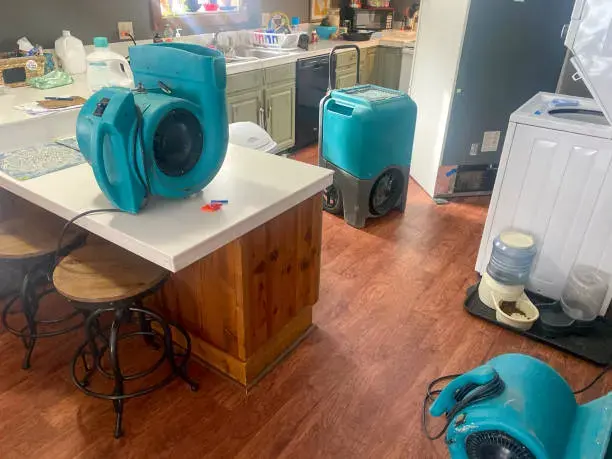 10Structural Drying & DehumidificationFraming, slab and wall cavities dried to a verified reading in Gulf humidity.View service
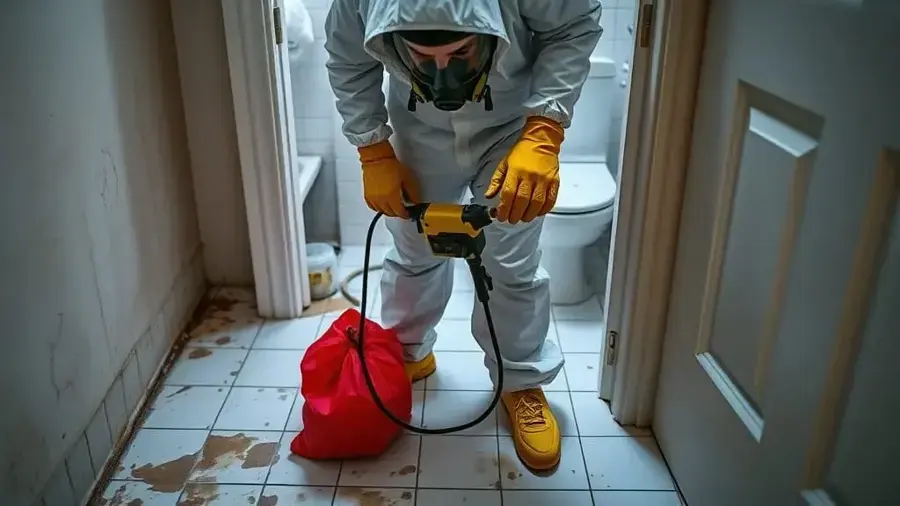 11Sewage & Black Water CleanupCategory 3 backups contained, removed and treated with antimicrobial.View service
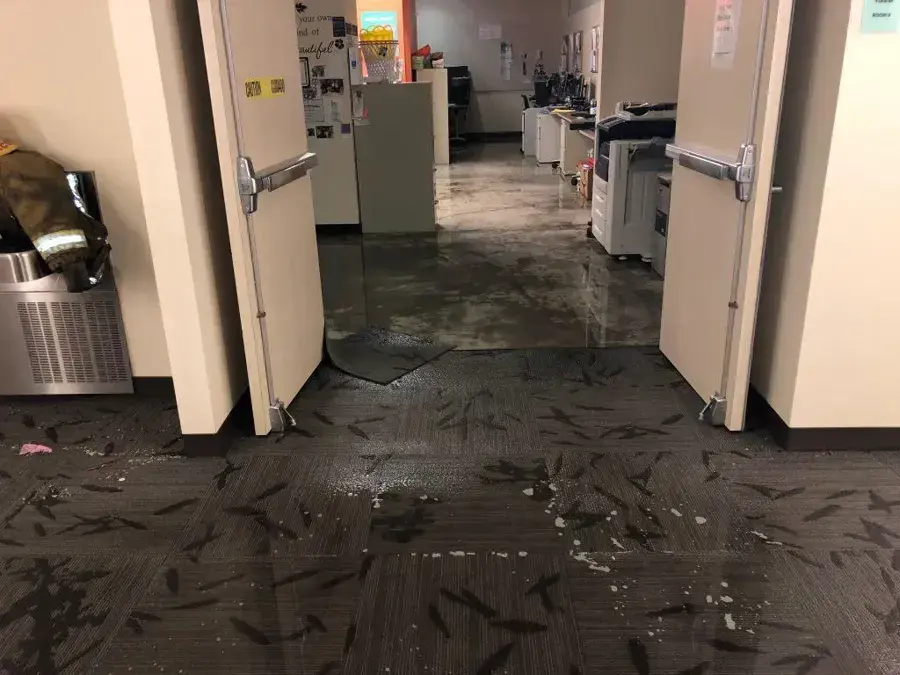 12Commercial Water Damage RestorationOffices, retail and medical suites dried with the least possible downtime.View service
What to do while the water is still moving
- Shut the main
Close the main valve at the curb box or where the supply enters the garage wall.
- Kill wet circuits
Switch off breakers for wet rooms only if the panel area is dry, and stay out of water near outlets.
- Photograph first
Wide and close photos of every wet room before anything is moved or thrown out.
- Lift and call
Pull rugs and belongings off the floor, then call. Mold can start inside 24 to 48 hours.
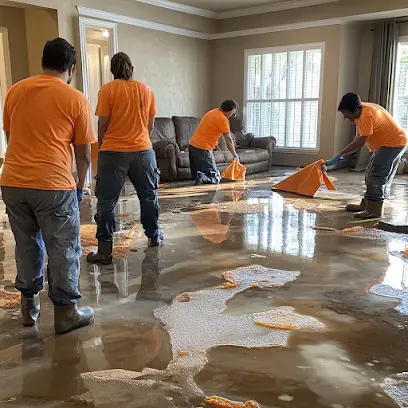
How the Sugar Land restoration crew handles a water loss
What separates a finished dry-out from a cosmetic one is the order of the work. The tech who does the walkthrough maps moisture before any equipment goes down, the extraction crew pulls the standing water, and the drying team sizes air movers and LGR dehumidifiers to each room.
Rapid local response
The response team dispatches around the clock across Fort Bend County, with pumps, air movers and meters on the truck.
IICRC S500 drying standard
The drying team follows the industry drying standard: structural drying, not just surface drying.
Claim-ready documentation
Crews keep daily moisture readings, drying logs and timestamped photos taken before any demolition.
Fort Bend water experts
Slab leaks on shifting clay, attic AC overflow and hurricane rain are the everyday losses local pros know.
Water damage dried to the IICRC S500 standard
IICRC S500 is the industry drying standard. Crews dry the structure, not just the surface: framing, slab and wall cavities included. Category 1, 2 and 3 water are handled differently, and Class 1 through 4 sets how much equipment a room needs.
- IICRC S500 drying standard
- Daily moisture readings
- Structural drying, not just surface
Drying timeline: a contained loss usually dries in three to five days; hardwood, plaster and thick slab take longer. Equipment leaves on readings within 2 to 4 points of a dry reference material, not on a schedule.
The gear a real dry-out runs on
- Truck-mounted extraction
- Air movers set to each room
- LGR and desiccant dehumidifiers
- Thermal imaging and pinless meters
What does water damage restoration cost in Sugar Land, TX?
In Sugar Land, TX, water damage restoration typically runs $800 to $10,000 or more, depending on the water category, the square footage that got wet, the materials involved (carpet, laminate, drywall, ceilings) and how fast drying started. Sudden losses are often covered by insurance after the deductible.
Contained, clean water
$800 to $2,500
- One room or area
- Extraction and pad removal
- Air movers and daily readings
Several rooms
$2,500 to $6,000
- Baseboards and some drywall removed
- Wall cavity drying
- LGR dehumidifiers
Category 3 or whole floor
$6,000 to $10,000+
- Flood water, sewage or wide loss
- Removal of porous materials
- Full structural drying
For a closer planning number, use the water damage cost calculator. The final scope comes from the moisture map.
What a water damage dry-out looks like in Sugar Land

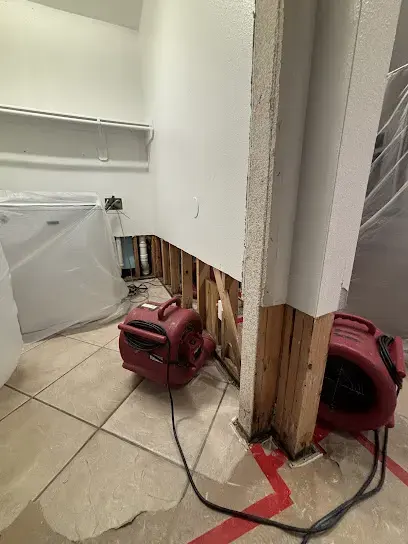
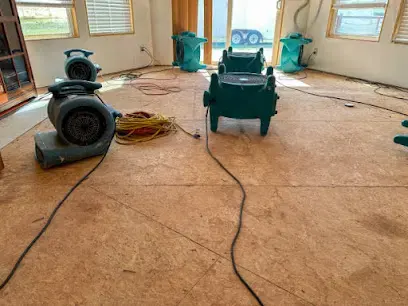
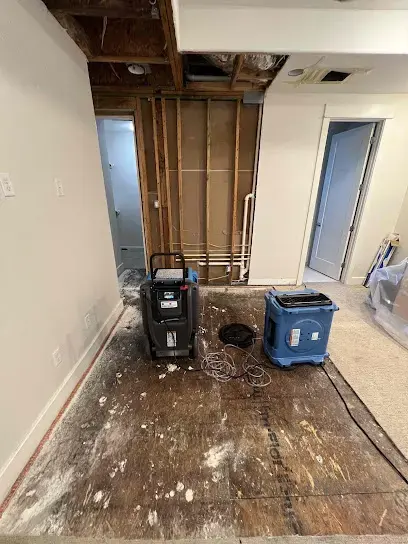
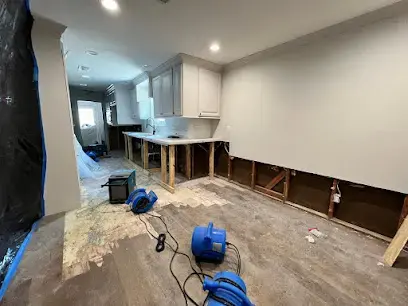
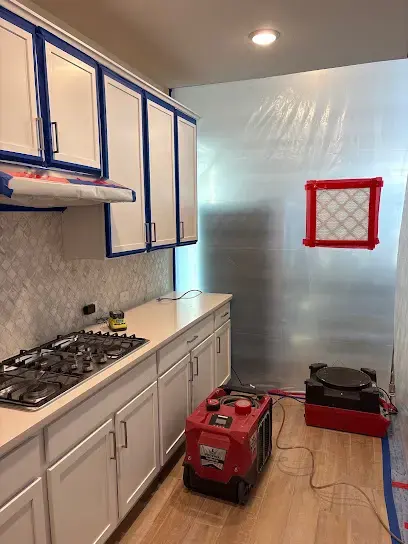
All water damage categories covered in Sugar Land, TX
Category 1, clean
Supply lines, burst pipes, water heaters. Dried in place when the start is fast.
Category 2, gray
Washer and dishwasher drains, AC overflow that sat. Soaked materials cleaned or pulled.
Category 3, black
Sewage, flood water, storm runoff. Porous materials removed, surfaces treated.
Sewage cleanupDocumentation for your insurance claim
A water claim is decided on the file. A complete file carries:
- The moisture map from day one
- Daily moisture and psychrometric logs
- Timestamped photos before any demolition
- The category and class of the loss
Sudden and accidental discharge is treated differently from rising flood water. Coverage depends on your policy, so it is worth checking with your own insurer.
Water damage restoration across Sugar Land and Fort Bend County
The drying team covers every Sugar Land ZIP code and the neighboring Fort Bend County cities, day or night.
Sugar Land ZIP codes covered
Outside these ZIPs but still in Fort Bend County? The same crews handle Missouri City, Stafford, Richmond, Rosenberg and Sienna.
First Colony & central Sugar Land
Sugar Creek & the US 59 corridor
Telfair, Riverstone & the Brazos side
Nearby Fort Bend cities
24/7 water damage restoration in Sugar Land, TX
Sugar Land water damage pros answer 24/7, weekends and holidays included. The restoration team extracts, dries and documents the loss across Sugar Land and Fort Bend County, from Sugar Creek to Riverstone.
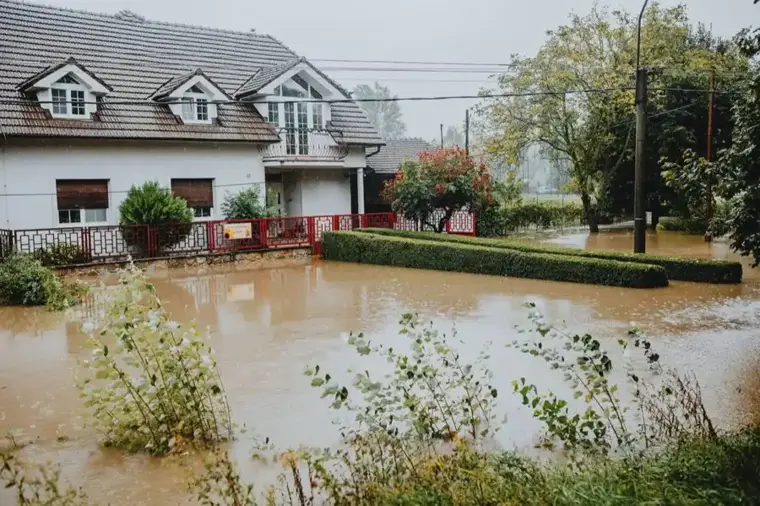
Water damage in Sugar Land, TX: the local risk profile
Slab foundations, attic equipment and Gulf storms shape almost every water loss in town.
- Expansive clay shifts 1970s to 2000s slab homes and cracks the supply pipes buried beneath them.
- Attic air handlers and water heaters overflow straight onto ceilings in the long cooling season.
- The Brazos River and Oyster Creek run high in tropical rain, and levee gates close while pumps clear the streets.
- Rare hard freezes, like February 2021, split attic and exterior-wall pipes built for heat.
Sugar Land water damage questions
How quickly can a restoration crew start in Sugar Land?
The response team dispatches 24/7 across Sugar Land and Fort Bend County, and emergency water calls get priority. The first hours matter because water keeps wicking into drywall, baseboards and cabinets until extraction begins.
What should I do first while the water is still spreading?
If it is safe, close the main water shutoff and switch off breakers for wet rooms, but only if the panel area is dry. Stay out of standing water near outlets, photograph everything before moving it, lift rugs and belongings off the floor, then call.
Why are slab leaks so common in Sugar Land?
The city sits on expansive clay that shrinks in dry months and swells when rain returns, which moves slab foundations and stresses the supply pipes buried beneath them. Many homes in First Colony and Sugar Creek also have plumbing that is 30 years old or more.
Is water damage covered by homeowners insurance in Texas?
Sudden and accidental water, such as a burst supply line or a failed water heater, is often covered after the deductible. Rising flood water is generally covered by a separate flood policy. Coverage depends on your policy, so it is worth checking with your own insurer.
What does IICRC S500 mean?
IICRC S500 is the industry standard for professional water damage restoration. It defines how water category and class are identified, how drying is planned, and how dryness is verified with readings instead of a guess.
How long does drying usually take?
A contained Class 1 or 2 loss usually dries in three to five days. Hardwood, plaster, thick slab and ceilings soaked from above take longer. Equipment stays until the readings say dry, not until a set date.
When does drywall have to come out?
Drywall that sagged, crumbled or was touched by Category 3 water comes out. Drywall wet with clean water and dried quickly can often stay, with baseboards removed and small holes to let air into the wall.
Why is sewage handled differently?
Sewage backup is Category 3 the moment it happens. The mitigation team works in protective gear with containment and HEPA air scrubbers, removes porous materials it touched, and treats surfaces with an EPA-registered antimicrobial.
How is the cost of water damage restoration worked out?
Mainly by four drivers: the water category, the square footage that got wet, the materials involved, and how fast drying started. Try the water damage cost calculator for a typical range for your situation.
What is the difference between mitigation and repair?
Mitigation is the emergency work: extraction, removal of damaged materials and drying. Repair, or reconstruction, replaces drywall, flooring and cabinets once the structure reads dry, and it is a separate phase.
Water in your Sugar Land home? Start the dry-out now.
Every hour of standing water means more drywall, flooring and cabinets to replace. The restoration team extracts, dries and documents the loss to the IICRC S500 standard.