Structural Drying & Dehumidification in Sugar Land, TX
Surface dry is not dry. The drying team maps moisture in framing, slab and wall cavities, sizes air movers and LGR dehumidifiers to each room and keeps equipment running until the readings say dry.
(888) 926-4485Get the Sugar Land structure dried right- IICRC S500 drying standard
- Truck-mounted extraction
- 24/7 dispatch
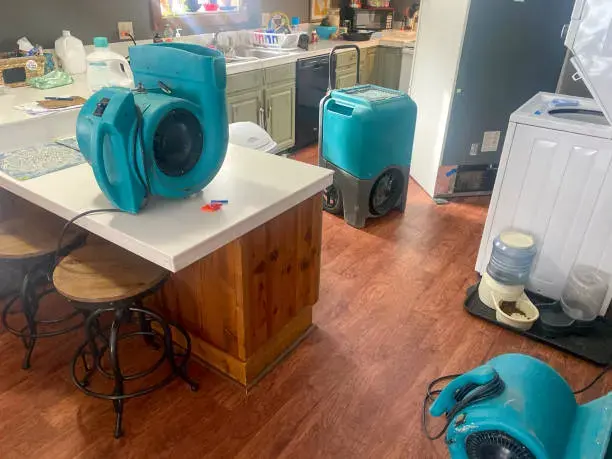
First steps for structural drying and dehumidification in Sugar Land
- Keep windows closed
Humid outside air slows drying; keep the house closed and the AC running if it works.
- Leave equipment on
Do not switch off air movers or dehumidifiers, even overnight.
- Empty or drain
If a dehumidifier uses a bucket, empty it; most professional units pump to a drain.
- Note any changes
Mention new smells, stains or soft spots to the drying team at the daily check.
How structural drying and dehumidification is handled to the S500 standard
Rapid local response
The response team dispatches around the clock across Fort Bend County, with pumps, air movers and meters on the truck.
IICRC S500 drying standard
The drying team follows the industry drying standard: structural drying, not just surface drying.
Claim-ready documentation
Crews keep daily moisture readings, drying logs and timestamped photos taken before any demolition.
Fort Bend water experts
Slab leaks on shifting clay, attic AC overflow and hurricane rain are the everyday losses local pros know.
What does structural drying and dehumidification cost in Sugar Land, TX?
In Sugar Land, TX, structural drying and dehumidification typically runs $1,000 to $8,000 or more, depending on the class of the loss, the number of rooms, the equipment count and how many days the readings take to reach the goal.
Class 1 or 2, one area
$1,000 to $2,500
- Moisture mapping
- Air movers and LGR
- Daily readings
Class 2 or 3, several rooms
$2,500 to $5,000
- Wall cavity drying
- Ceiling drying
- Psychrometric logs
Class 4 or whole floor
$5,000 to $8,000+
- Desiccant dehumidification
- Hardwood or slab drying
- Extended equipment days
For a planning number, try the water damage cost calculator. The final scope depends on what the moisture map shows on site.
How structural drying and dehumidification is dried out in Sugar Land
- 1
Map the moisture
The tech who does the walkthrough maps moisture with pinless meters and thermal imaging before any equipment goes down.
- 2
Extract the water
The extraction crew pulls standing water with truck-mounted extraction, so it leaves the building instead of spreading.
- 3
Set the drying plan
Air movers go in at each room's evaporation load, with LGR dehumidifiers pulling that moisture out of the Gulf air.
- 4
Read it dry
Most crews log readings daily and pull equipment when wet material sits within 2 to 4 points of a dry reference.
Structural drying is the part of a water loss nobody sees and everybody pays for if it goes wrong. In Sugar Land the outdoor air is humid most of the year, so opening windows does not dry a house; it adds moisture. The drying team builds a closed drying environment instead: air movers push air across wet surfaces to speed evaporation, and dehumidifiers pull that moisture out of the air and send it down a drain.
Class 1 through 4: how much equipment a room needs
The IICRC S500 standard sorts losses by class, which describes how much water there is to evaporate. Class 1 is a small area with little absorbed water. Class 2 is a whole room with wet carpet and walls wicked up to about 24 inches. Class 3 is water from overhead that soaked ceilings, walls and insulation. Class 4 means dense materials such as hardwood, concrete and plaster that hold water tightly. The class sets how many air movers and how much dehumidification each room needs.
- Air movers are set to the room's evaporation load, not one per corner.
- LGR dehumidifiers handle most losses in warm, humid air.
- Desiccant dehumidifiers handle Class 4 materials and cooler spaces.
- Wall cavity and under-cabinet drying systems reach trapped water.
Readings decide when drying is done
The tech who does the walkthrough takes a reading from a dry reference material in an unaffected part of the house, then compares every wet area against it. Each day the drying team records moisture readings, temperature and relative humidity, and calculates grains per pound to confirm the dehumidifiers are keeping up. Equipment comes out when wet materials land within 2 to 4 points of the dry reference, not when the surface looks dry. Those daily logs are also what an adjuster looks for in the claim file.
Why fast drying matters in Gulf humidity
Mold can begin growing within 24 to 48 hours on wet materials in a warm, humid house, and that window is shorter in a Sugar Land summer. The EPA indoor air quality pages explain how moisture and humidity affect a home, and Texas A&M AgriLife Extension covers humidity control in Texas houses. Extraction always comes first; see water extraction for that step.
Structural Drying and Dehumidification across Sugar Land and Fort Bend County
The Sugar Land restoration crew covers First Colony, Sugar Creek, Telfair, Riverstone, Greatwood and New Territory, plus Missouri City, Stafford, Richmond and Rosenberg, ZIP codes 77478, 77479, 77487, 77496, 77498.
See every neighborhood coveredRelated water damage services in Sugar Land
Structural Drying and Dehumidification questions in Sugar Land
What does IICRC S500 mean?
IICRC S500 is the industry standard for professional water damage restoration. It sets how water category and class are identified, how drying is planned and how dryness is verified.
Why not just open the windows and run fans?
Outdoor air in Sugar Land is humid most of the year. Fans without dehumidification move moisture around the room and can push it into other materials.
How is dry actually measured?
With moisture meters compared against a dry reference material in an unaffected part of the house. The drying goal is within 2 to 4 points of that reference.
How long does structural drying take?
A contained Class 1 or 2 loss usually dries in three to five days. Class 3 and 4 losses with ceilings, hardwood or concrete can take a week or more.
What is the difference between LGR and desiccant dehumidifiers?
LGR (low grain refrigerant) dehumidifiers cool air to condense water and work well in warm, humid conditions. Desiccant units use a drying material and work better for dense Class 4 materials and cooler spaces.
Why does the equipment make the house warm?
Air movers and dehumidifiers give off heat, and warm air holds and releases moisture faster. Some warmth during drying is normal and helps the process.
Structural Drying and Dehumidification in Sugar Land, day or night
Water keeps moving into drywall, baseboards and cabinets until someone stops it. The Sugar Land restoration crew extracts, dries and documents the loss to the IICRC S500 standard.