AC & Condensate Leak Water Damage in Sugar Land, TX
An air handler in a Sugar Land attic can pull gallons of water out of the air every day. When the drain clogs or the pan overflows, that water lands on the ceiling. The drying team removes the wet insulation and dries the ceiling and walls to the IICRC S500 standard.
(888) 926-4485Get the Sugar Land AC leak dried- IICRC S500 drying standard
- Truck-mounted extraction
- 24/7 dispatch
First steps for ac and condensate leak water damage in Sugar Land
- Turn the AC off
Switch the thermostat off so the coil stops making condensate.
- Check the pan
Look at the attic pan and drain from the decking only; do not step between joists.
- Catch the drip
Set a bucket under the ceiling stain and move furniture and bedding out of the way.
- Photograph it
Photograph the ceiling stain and the attic pan with dates for the claim file.
How ac and condensate leak water damage is handled to the S500 standard
Rapid local response
The response team dispatches around the clock across Fort Bend County, with pumps, air movers and meters on the truck.
IICRC S500 drying standard
The drying team follows the industry drying standard: structural drying, not just surface drying.
Claim-ready documentation
Crews keep daily moisture readings, drying logs and timestamped photos taken before any demolition.
Fort Bend water experts
Slab leaks on shifting clay, attic AC overflow and hurricane rain are the everyday losses local pros know.
What does ac and condensate leak water damage cost in Sugar Land, TX?
In Sugar Land, TX, AC condensate leak water damage typically runs $600 to $5,000 or more, depending on how long the leak ran, how much insulation got wet and whether ceilings in several rooms need removal.
Small ceiling stain
$600 to $1,500
- Moisture mapping
- Insulation removal at the pan
- Air mover and dehumidifier
Ceiling section removed
$1,500 to $3,000
- Drywall removal
- Attic floor drying
- Daily readings
Long leak, several rooms
$3,000 to $5,000+
- Wide insulation removal
- Wall cavity drying
- Antimicrobial if needed
For a planning number, try the water damage cost calculator. The final scope depends on what the moisture map shows on site.
How ac and condensate leak water damage is dried out in Sugar Land
- 1
Map the moisture
The tech who does the walkthrough maps moisture with pinless meters and thermal imaging before any equipment goes down.
- 2
Extract the water
The extraction crew pulls standing water with truck-mounted extraction, so it leaves the building instead of spreading.
- 3
Set the drying plan
Air movers go in at each room's evaporation load, with LGR dehumidifiers pulling that moisture out of the Gulf air.
- 4
Read it dry
Most crews log readings daily and pull equipment when wet material sits within 2 to 4 points of a dry reference.
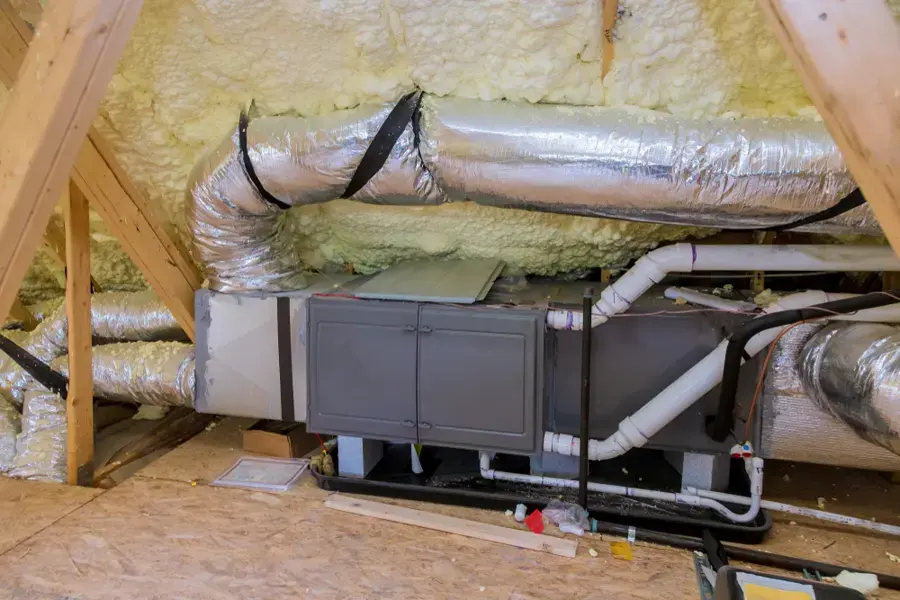
The Sugar Land cooling season runs most of the year, and in a humid Gulf climate a central air conditioner removes a lot of water from the indoor air. That condensate drips into a pan under the coil and drains through a small PVC pipe to the outside or a plumbing drain. In most homes in Greatwood, New Territory, Telfair and Riverstone the air handler sits in the attic, directly above bedrooms and hallways, so any overflow lands on the ceiling drywall below.
How condensate leaks start
Algae and sludge grow inside the drain pipe and slowly choke it. When the primary drain backs up, water should spill into a secondary pan with its own drain or a float switch that shuts the system down. Older secondary pans rust through, float switches get disabled, and pans crack under the weight of water. The leak is slow and steady, which is why it often soaks a wide area of insulation before a stain appears.
- A clogged primary drain overflows the coil pan.
- A rusted or cracked secondary pan leaks onto the attic floor.
- A disconnected drain fitting drips inside the attic.
- Condensation on uninsulated ducts drips onto insulation in peak summer.
How the water damage gets dried
The HVAC technician clears the drain and fixes the pan. The tech who does the walkthrough maps the ceiling and walls below with pinless meters and a thermal camera, then checks the attic floor and the insulation around the air handler. Soaked insulation is removed so the drywall and joists can dry. Ceiling drywall that stayed firm is often dried in place with air movers and an LGR dehumidifier; sagging or stained sections are removed. Readings are logged daily until the materials reach the drying goal.
Keeping the drain clear
A cup of white vinegar in the drain access each season and a working float switch prevent most of these losses. Energy Saver air conditioner maintenance covers the basic upkeep, and Texas A&M AgriLife Extension publishes guidance on humidity and home moisture in Texas. If the water heater sits on the same attic platform, the water heater failure page covers that failure too.
AC and Condensate Leak Water Damage across Sugar Land and Fort Bend County
The Sugar Land restoration crew covers First Colony, Sugar Creek, Telfair, Riverstone, Greatwood and New Territory, plus Missouri City, Stafford, Richmond and Rosenberg, ZIP codes 77478, 77479, 77487, 77496, 77498.
See every neighborhood coveredRelated water damage services in Sugar Land
AC and Condensate Leak Water Damage questions in Sugar Land
Why is my ceiling wet under the air conditioner?
Most often the condensate drain is clogged and the pan has overflowed, or the secondary pan has rusted through. The water soaks the attic insulation and then the ceiling drywall below.
Does the wet insulation have to come out?
Soaked blown-in insulation usually does, because it holds water against the drywall and loses its insulating value. Dry insulation around the edges can stay.
Can I keep running the AC during drying?
Only after the drain is cleared and the pan is repaired. Running it with a clogged drain adds more water. Once fixed, the system actually helps drying by removing humidity.
How long does a condensate leak take to dry?
A contained ceiling area usually dries in two to four days once wet insulation is out. A long, slow leak that reached walls can take longer.
Is AC leak water damage covered by insurance?
Sudden overflows are sometimes covered while slow, long-term leaks often are not, and the drain repair itself is usually maintenance. Coverage depends on your policy, so it is worth checking with your own insurer.
How can I prevent the next overflow?
Keep the primary drain clear, confirm the float switch shuts the system off when the pan fills, and replace a rusted secondary pan before it fails.
AC and Condensate Leak Water Damage in Sugar Land, day or night
Water keeps moving into drywall, baseboards and cabinets until someone stops it. The Sugar Land restoration crew extracts, dries and documents the loss to the IICRC S500 standard.