Burst Pipe Cleanup in Sugar Land, TX
A pressurized supply pipe can release hundreds of gallons an hour into walls, ceilings and floors. The extraction crew pulls the water out and the drying team dries every cavity it reached to the IICRC S500 standard.
(888) 926-4485Start the burst pipe cleanup in Sugar Land- IICRC S500 drying standard
- Truck-mounted extraction
- 24/7 dispatch
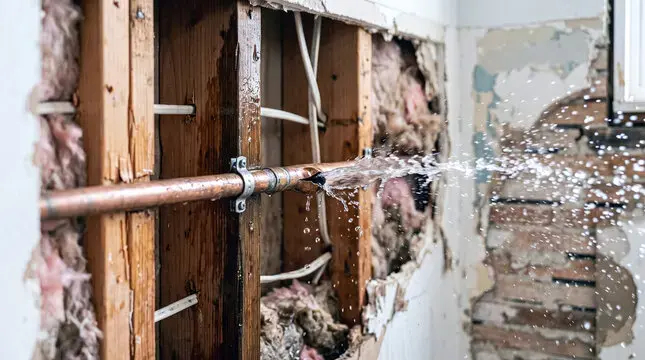
First steps for burst pipe cleanup in Sugar Land
- Close the main
Shut the main valve at the curb box or garage wall, then open a low faucet to drain pressure.
- Cut power to wet rooms
Switch off breakers for rooms with wet ceilings or walls if the panel area is dry.
- Drain a bulging ceiling
Poke a small hole at the low point of a sagging ceiling over a bucket.
- Photograph everything
Photograph the broken pipe, the wet rooms and damaged belongings before cleanup.
How burst pipe cleanup is handled to the S500 standard
Rapid local response
The response team dispatches around the clock across Fort Bend County, with pumps, air movers and meters on the truck.
IICRC S500 drying standard
The drying team follows the industry drying standard: structural drying, not just surface drying.
Claim-ready documentation
Crews keep daily moisture readings, drying logs and timestamped photos taken before any demolition.
Fort Bend water experts
Slab leaks on shifting clay, attic AC overflow and hurricane rain are the everyday losses local pros know.
What does burst pipe cleanup cost in Sugar Land, TX?
In Sugar Land, TX, burst pipe cleanup typically runs $1,200 to $8,000 or more, depending on how long the pipe ran, whether ceilings and walls on two floors got wet, the flooring and how fast drying started.
One area, caught fast
$1,200 to $2,500
- Extraction
- Baseboard removal and cavity access
- Air movers and dehumidifier
Ceiling and walls
$2,500 to $5,000
- Ceiling drywall removal
- Wall cavity drying
- Daily moisture readings
Two floors
$5,000 to $8,000+
- Multi-room extraction
- Flooring and drywall removal
- Full structural drying
For a planning number, try the water damage cost calculator. The final scope depends on what the moisture map shows on site.
How burst pipe cleanup is dried out in Sugar Land
- 1
Map the moisture
The tech who does the walkthrough maps moisture with pinless meters and thermal imaging before any equipment goes down.
- 2
Extract the water
The extraction crew pulls standing water with truck-mounted extraction, so it leaves the building instead of spreading.
- 3
Set the drying plan
Air movers go in at each room's evaporation load, with LGR dehumidifiers pulling that moisture out of the Gulf air.
- 4
Read it dry
Most crews log readings daily and pull equipment when wet material sits within 2 to 4 points of a dry reference.
A burst pipe is a supply line under full city pressure, so it keeps pouring until someone closes the main shutoff. In a two-story Sugar Land house the water often starts upstairs or in the attic and comes down through ceilings, light fixtures and interior walls. Homes built in the 1980s and early 1990s may still have gray polybutylene supply pipe, which becomes brittle with age, and fittings on copper and PEX can fail at any age.
Why burst pipe water spreads so far
Clean supply water moves fast and quietly. It runs along the top plates of walls, fills the bottom of wall cavities, soaks ceiling drywall and flows under flooring on the slab. The visible puddle is usually the smallest part of the loss. The tech who does the walkthrough uses thermal imaging and pinless meters to follow the water room by room and floor by floor.
- Ceilings under an upstairs or attic break take water first.
- Interior walls act as channels down to the slab.
- Flooring on the slab spreads water under neighboring rooms.
- Insulation in exterior walls holds water against the framing.
How a burst pipe cleanup runs
After the plumber repairs the pipe, the extraction crew removes standing water and pulls water out of carpet and pad. Wet ceiling drywall that sagged comes down in a controlled way; walls get baseboards removed and small access holes so air reaches the cavity. Air movers and LGR dehumidifiers are set to each room's evaporation load, and readings go in the drying log every day. Because this is clean water and it starts as Category 1, much of the structure can be dried in place when the work starts quickly.
Preventing the next one
Knowing where the main shutoff is saves more drywall than anything else. EPA WaterSense walks through finding hidden leaks, and Texas A&M AgriLife Extension publishes home water guidance for Texas homeowners. If the break happened during a freeze, see frozen pipe cleanup for the attic and exterior-wall details.
Burst Pipe Cleanup across Sugar Land and Fort Bend County
The Sugar Land restoration crew covers First Colony, Sugar Creek, Telfair, Riverstone, Greatwood and New Territory, plus Missouri City, Stafford, Richmond and Rosenberg, ZIP codes 77478, 77479, 77487, 77496, 77498.
See every neighborhood coveredRelated water damage services in Sugar Land
Burst Pipe Cleanup questions in Sugar Land
What should I do first when a pipe bursts?
Close the main water shutoff, open a low faucet to relieve pressure, and turn off power to wet rooms if the panel area is dry. Then photograph the damage before anything is moved.
Can the walls be dried without removing them?
Often yes with clean water and a fast start. Baseboards come off and small access holes let air into the cavity. Drywall that sagged, crumbled or stayed wet for days is usually replaced.
What is polybutylene and should it worry me?
Polybutylene is a gray plastic supply pipe used in many homes built from the late 1970s to the mid-1990s. It becomes brittle with age and is prone to sudden failures, so many owners replace it.
How long does burst pipe drying take?
A contained Class 1 or 2 loss usually dries in three to five days. Multi-story losses with wet ceilings and wall cavities can take a week or more, and readings decide when equipment comes out.
Is a burst pipe covered by insurance?
Sudden and accidental discharge from a burst supply pipe is commonly covered under Texas homeowners policies after the deductible, while long-term seepage often is not. Coverage depends on your policy, so it is worth checking with your own insurer.
Why does the upstairs break damage the downstairs so badly?
Water follows gravity through ceiling cavities, light fixtures and interior walls, so a break on the second floor or in the attic reaches rooms directly below and beside it.
Burst Pipe Cleanup in Sugar Land, day or night
Water keeps moving into drywall, baseboards and cabinets until someone stops it. The Sugar Land restoration crew extracts, dries and documents the loss to the IICRC S500 standard.