Water Extraction & Removal in Sugar Land, TX
Standing water on a slab floor wicks into baseboards, drywall and cabinet toe kicks within hours. The extraction crew pulls it out with truck-mounted equipment, then the drying team sets up to the IICRC S500 standard.
(888) 926-4485Get the water out of the Sugar Land house- IICRC S500 drying standard
- Truck-mounted extraction
- 24/7 dispatch
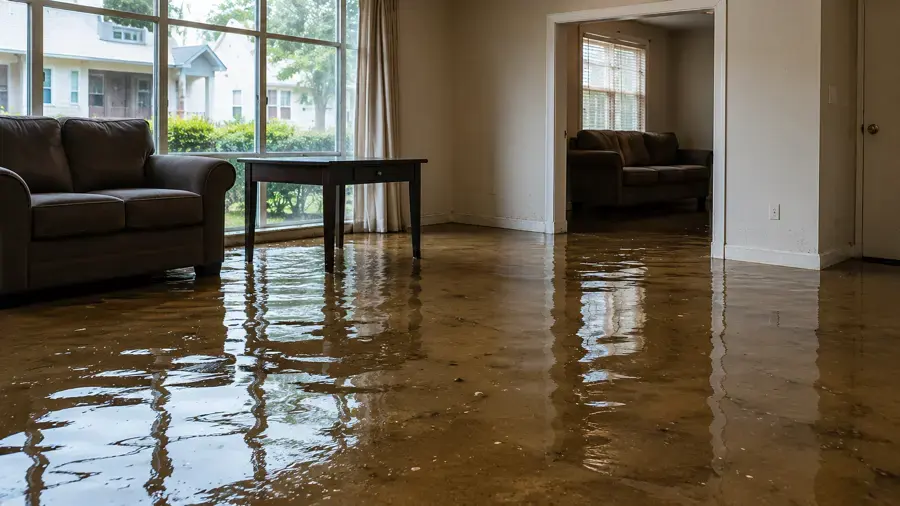
First steps for water extraction and removal in Sugar Land
- Stop the source
Close the main shutoff, usually at the curb box or where the supply enters the garage wall.
- Kill wet circuits
Switch off breakers for wet rooms only if the panel area is dry and safe to stand in.
- Photograph first
Take wide and close photos of every wet room before anything is moved or thrown out.
- Lift what floats
Move rugs, electronics and paper off the floor and set furniture legs on foil or blocks.
How water extraction and removal is handled to the S500 standard
Rapid local response
The response team dispatches around the clock across Fort Bend County, with pumps, air movers and meters on the truck.
IICRC S500 drying standard
The drying team follows the industry drying standard: structural drying, not just surface drying.
Claim-ready documentation
Crews keep daily moisture readings, drying logs and timestamped photos taken before any demolition.
Fort Bend water experts
Slab leaks on shifting clay, attic AC overflow and hurricane rain are the everyday losses local pros know.
What does water extraction and removal cost in Sugar Land, TX?
In Sugar Land, TX, water extraction and removal with initial drying typically runs $800 to $6,000 or more, depending on the water category, square footage, the flooring and how fast extraction started.
One room, clean water
$800 to $1,800
- Truck-mounted extraction
- Pad removal if needed
- Air movers and a dehumidifier
Several rooms
$1,800 to $3,500
- Extraction across hard floors and carpet
- Baseboard and toe kick removal
- Daily moisture readings
Whole floor or Category 3
$3,500 to $6,000+
- Large-area extraction
- Removal of porous materials
- Full structural drying setup
For a planning number, try the water damage cost calculator. The final scope depends on what the moisture map shows on site.
How water extraction and removal is dried out in Sugar Land
- 1
Map the moisture
The tech who does the walkthrough maps moisture with pinless meters and thermal imaging before any equipment goes down.
- 2
Extract the water
The extraction crew pulls standing water with truck-mounted extraction, so it leaves the building instead of spreading.
- 3
Set the drying plan
Air movers go in at each room's evaporation load, with LGR dehumidifiers pulling that moisture out of the Gulf air.
- 4
Read it dry
Most crews log readings daily and pull equipment when wet material sits within 2 to 4 points of a dry reference.
Extraction is the step that decides how much of a Sugar Land house gets saved. Almost every home in First Colony, Sugar Creek, Telfair and Riverstone sits on a concrete slab, so water has nowhere to drain. It spreads sideways under carpet pad, climbs drywall by capillary action and soaks into the particleboard of kitchen and bath cabinets. The extraction crew removes as much of that water as possible in liquid form, because pulling water out is far faster and cheaper than evaporating it later.
How truck-mounted extraction works on a slab home
A truck-mounted unit runs a powerful vacuum outside the house and pulls water through hoses to a holding tank on the truck, so the water leaves the building instead of moving to the next room. On carpet, the crew uses weighted extraction tools that press the pad and pull water up through it. On tile, wood-look vinyl and bare slab, squeegee wands and floor tools do the work. Portable extractors reach bathrooms and upstairs rooms where the hoses cannot.
- Carpet and pad: weighted tools pull water from the pad, and a wet pad usually gets removed rather than dried.
- Hard floors: squeegee wands and floor tools clear the surface and the joints.
- Walls and cabinets: toe kicks come off so water trapped behind them can be reached.
Moisture mapping before and after extraction
The tech who does the walkthrough maps moisture with pinless meters and a thermal camera before extraction starts and again after it ends. That map shows how far water traveled under the baseboards, into the next room and up the wall. It is also the first page of the claim file, together with timestamped photos taken before anything is removed. A category call happens at the same time: clean supply water is Category 1, water from a washer or dishwasher is Category 2, and anything from outside or from a drain is Category 3, which changes what gets removed.
What happens once the standing water is gone
Extraction ends where structural drying begins. Air movers go in at the evaporation load of each room and LGR dehumidifiers pull that moisture out of the humid Gulf air. Readings are logged daily until the wet material lands within 2 to 4 points of a dry reference material elsewhere in the house. For the water safety basics while you wait, Ready.gov flood safety covers electrical and health precautions, and the Texas Department of Insurance explains how a homeowners water claim is filed in Texas.
Water Extraction and Removal across Sugar Land and Fort Bend County
The Sugar Land restoration crew covers First Colony, Sugar Creek, Telfair, Riverstone, Greatwood and New Territory, plus Missouri City, Stafford, Richmond and Rosenberg, ZIP codes 77478, 77479, 77487, 77496, 77498.
See every neighborhood coveredRelated water damage services in Sugar Land
Water Extraction and Removal questions in Sugar Land
How fast does standing water need to come out?
As soon as possible. Within the first day, water climbs drywall and soaks cabinet bases, and mold can start inside 24 to 48 hours in Sugar Land humidity. Extraction first, then drying, keeps the list of removed materials short.
Can a shop vacuum do the same job?
A shop vacuum handles a small spill on tile. It cannot pull water out of carpet pad or reach water under baseboards, and it moves a few gallons at a time. Truck-mounted extraction moves far more water and sends it outside the building.
Does wet carpet always get thrown out?
Not always. With clean Category 1 water and fast extraction, carpet can often be dried in place, though the pad is usually replaced. Carpet touched by Category 3 water from outside or a drain is removed.
How is the water category decided?
By the source. A supply line or tub overflow starts as Category 1, a washer or dishwasher discharge is Category 2, and flood water, roof runoff that crossed the yard, or sewage is Category 3. Clean water that sits for a few days can also degrade to a higher category.
Will the floors need to be torn out?
It depends on the floor. Tile on slab usually stays. Laminate and engineered wood often trap water underneath and may need removal, which the moisture map shows before anything comes up.
Is water extraction covered by insurance?
Sudden and accidental water, such as a burst supply line, is often covered under a Texas homeowners policy after the deductible, while rising flood water falls under flood insurance. Coverage depends on your policy, so it is worth checking with your own insurer.
Water Extraction and Removal in Sugar Land, day or night
Water keeps moving into drywall, baseboards and cabinets until someone stops it. The Sugar Land restoration crew extracts, dries and documents the loss to the IICRC S500 standard.