Slab Leak Water Damage in Sugar Land, TX
A pipe under the slab can leak for weeks before anyone sees it. Once the plumber finds it, the restoration team maps how far the water spread, removes what cannot dry and dries the slab to the IICRC S500 standard.
(888) 926-4485Get the Sugar Land slab leak dried- IICRC S500 drying standard
- Truck-mounted extraction
- 24/7 dispatch
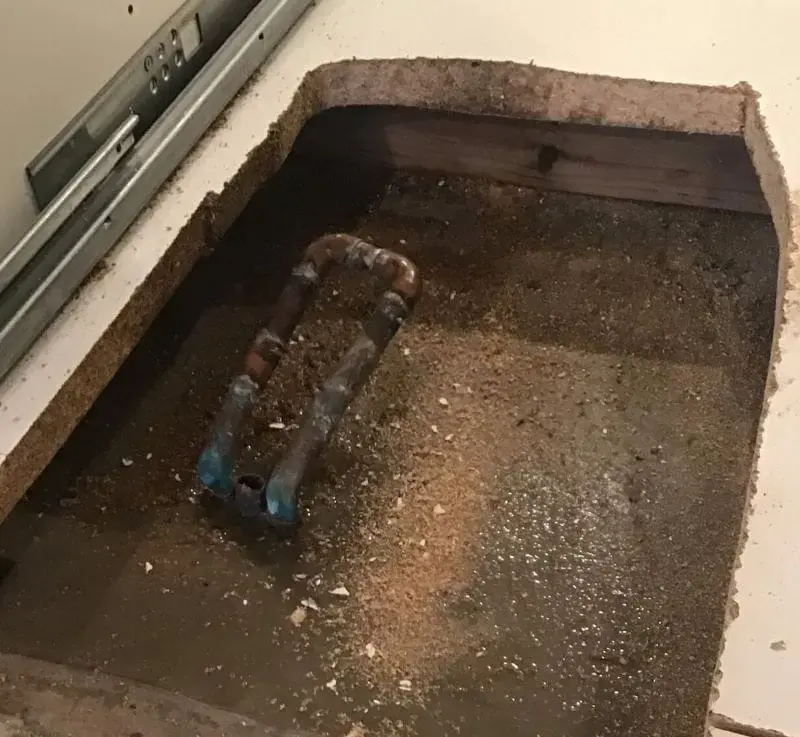
First steps for slab leak water damage in Sugar Land
- Check the meter
Turn off every fixture and watch the water meter; a moving dial points to a hidden leak.
- Shut the supply
Close the main shutoff if water is surfacing or the leak is on a hot water line.
- Photograph the floor
Photograph warm spots, damp baseboards and cupped flooring before anything is removed.
- Call a leak locator
Line up a plumber with electronic leak detection to find the exact pipe.
How slab leak water damage is handled to the S500 standard
Rapid local response
The response team dispatches around the clock across Fort Bend County, with pumps, air movers and meters on the truck.
IICRC S500 drying standard
The drying team follows the industry drying standard: structural drying, not just surface drying.
Claim-ready documentation
Crews keep daily moisture readings, drying logs and timestamped photos taken before any demolition.
Fort Bend water experts
Slab leaks on shifting clay, attic AC overflow and hurricane rain are the everyday losses local pros know.
What does slab leak water damage cost in Sugar Land, TX?
In Sugar Land, TX, slab leak water damage mitigation typically runs $1,500 to $9,000 or more, not counting the plumbing repair, depending on how many rooms the water reached, the flooring type and how long the leak ran.
Contained area
$1,500 to $3,000
- Moisture mapping
- Baseboard and pad removal
- Slab and wall base drying
Several rooms
$3,000 to $5,500
- Laminate or wood removal
- Wall cavity drying
- Daily readings to goal
Long-running leak
$5,500 to $9,000+
- Wide flooring removal
- Cabinet base removal
- Extended slab drying
For a planning number, try the water damage cost calculator. The final scope depends on what the moisture map shows on site.
How slab leak water damage is dried out in Sugar Land
- 1
Map the moisture
The tech who does the walkthrough maps moisture with pinless meters and thermal imaging before any equipment goes down.
- 2
Extract the water
The extraction crew pulls standing water with truck-mounted extraction, so it leaves the building instead of spreading.
- 3
Set the drying plan
Air movers go in at each room's evaporation load, with LGR dehumidifiers pulling that moisture out of the Gulf air.
- 4
Read it dry
Most crews log readings daily and pull equipment when wet material sits within 2 to 4 points of a dry reference.
Slab leaks are one of the signature water losses in Sugar Land. The city sits on expansive Gulf Coast clay that shrinks in a dry summer and swells when the rain returns, and that movement stresses the copper and plastic supply lines buried under the foundation. Homes in First Colony, Sugar Creek, Sweetwater and Colony Bend were built from the 1970s through the 1990s, so many of those under-slab lines are now 30 to 50 years old.
Signs the leak is under the slab
Slab leaks rarely announce themselves with a puddle. More often the first sign is a warm spot on tile over a hot water line, a water bill that climbs without explanation, a musty smell from a closet, or wood-look vinyl and laminate that starts to cup. By the time water shows at a baseboard, it has usually spread under several rooms.
- Warm or damp spots on the floor, often in a hallway or kitchen.
- The sound of running water with every fixture off.
- A water meter that keeps spinning with the house shut down.
- Cupping laminate, loose tile or damp carpet with no visible source.
How slab leak water damage gets dried
A plumber locates and repairs the leak, by rerouting the line through the attic or walls or by opening the slab. The tech who does the walkthrough then maps moisture across every room on that floor, because water under flooring travels much farther than it looks. Flooring that traps water, such as laminate, engineered wood and carpet pad, usually comes up. Baseboards come off and small holes at the wall base let air into the cavity. Air movers and LGR dehumidifiers then dry the slab surface and the bottom of the walls, and readings are recorded daily until they reach the drying goal.
Plumbing repair and water damage are separate steps
Finding and fixing the pipe is plumbing work; the water it left behind is restoration work. Many Texas policies treat the two differently, covering the resulting water damage while limiting the cost of accessing the pipe. The Texas Department of Insurance publishes consumer guides on homeowners claims, and EPA WaterSense explains how to use the water meter to check for a hidden leak. For a quick self-check, try the slab leak warning-sign checker. Coverage depends on your policy, so it is worth checking with your own insurer.
Slab Leak Water Damage across Sugar Land and Fort Bend County
The Sugar Land restoration crew covers First Colony, Sugar Creek, Telfair, Riverstone, Greatwood and New Territory, plus Missouri City, Stafford, Richmond and Rosenberg, ZIP codes 77478, 77479, 77487, 77496, 77498.
See every neighborhood coveredRelated water damage services in Sugar Land
Slab Leak Water Damage questions in Sugar Land
Why are slab leaks so common in Sugar Land?
The expansive clay under Fort Bend County shrinks in drought and swells when wet, which moves the foundation and stresses pipes buried beneath it. Age matters too: many First Colony and Sugar Creek homes have supply lines that are 30 years old or more.
Does the whole floor come up after a slab leak?
Not necessarily. The moisture map decides. Tile set directly on the slab often stays, while laminate, engineered wood and carpet pad over wet concrete usually come up in the affected area.
How long does a slab take to dry?
A contained slab leak area usually dries in three to five days with air movers and LGR dehumidifiers. Thick concrete that stayed wet for weeks can take longer, and readings decide when it is done.
Should the leak be rerouted or repaired through the slab?
That is a plumbing decision based on the pipe material, its age and how many leaks the house has had. Either way, the water already under the flooring still has to be dried.
Can mold grow under the flooring?
Yes. Water trapped under flooring in a warm, humid house can support mold growth inside 24 to 48 hours, which is why wet pad and trapping floors usually come up.
Is slab leak damage covered by insurance?
Many Texas homeowners policies cover sudden water damage from a slab leak, while the cost of reaching the pipe may be limited. Coverage depends on your policy, so it is worth checking with your own insurer.
Slab Leak Water Damage in Sugar Land, day or night
Water keeps moving into drywall, baseboards and cabinets until someone stops it. The Sugar Land restoration crew extracts, dries and documents the loss to the IICRC S500 standard.